
we need to talk more about flour
A lengthy tale about wheat, milling, and learning how to bake sourdough
originally published on Cookie Jar Substack
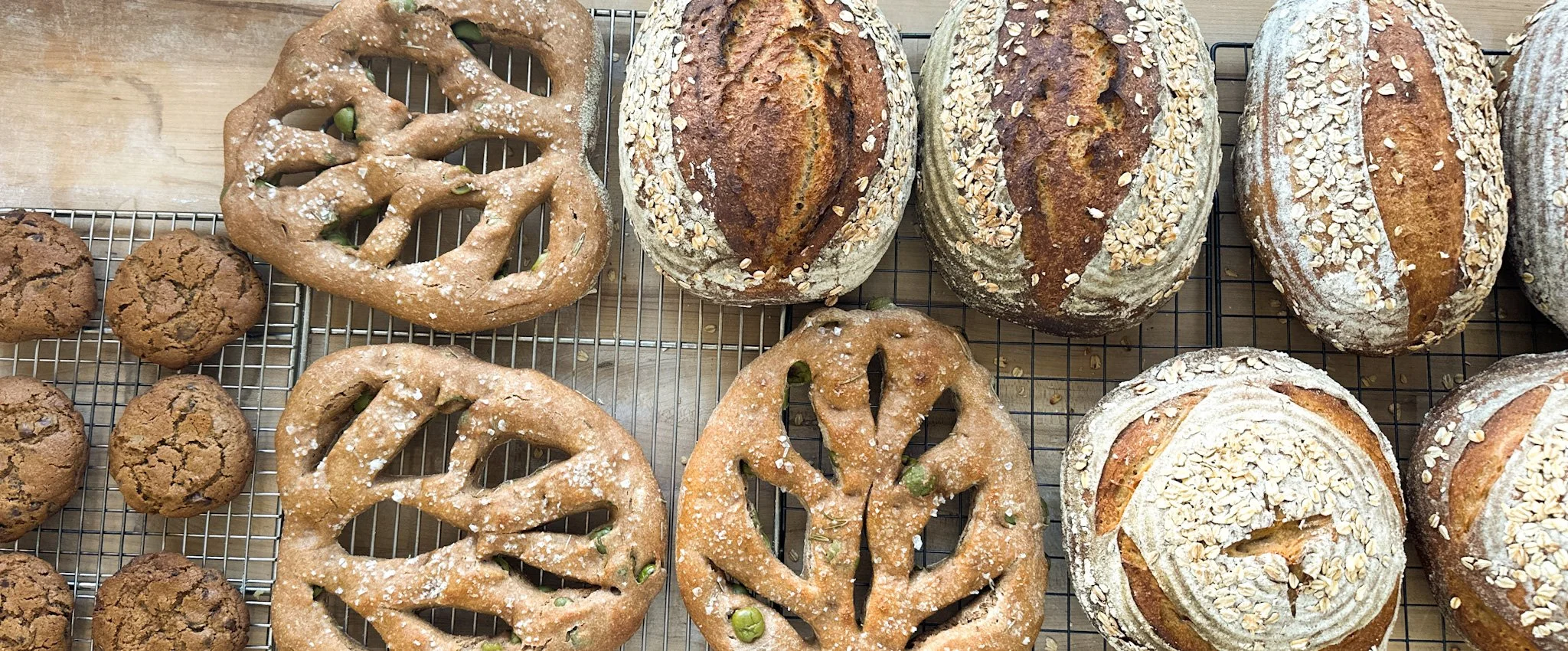
Sourdough breads baked with heirloom wheat, organic, stone-milled flour
A little over a year ago, I ventured outside of my comfort in the “hot kitchen” to finally understand and begin to master the craft of sourdough bread baking. As someone who cooks based on ingredients first, it was a little more than frustrating to find so little focus on the primary ingredient in bread: the flour. What the heck is going on here? How can there be so much interest in “farm to table” eating and ingredient sourcing transparency on the “hot kitchen” side (restaurants) and so very little on the cold (bakeries)?! One thing was certain, if I was about to embark on a project to finally bake consistently good loaves of sourdough, I was certainly not going to ignore the origins of the flour.
Nearly 15 years ago, just after graduating from the CIA (culinary school, not spy agency), I became interested in wheat… Or, I should say wheatS, plural (for there are as many varieties of wheat as there are grapes for wine). I became fascinated with the differences, not only in flavor, but also in the growing-resiliency between heirloom varieties and the new-fangled modern ones.
WHEAT VARIETIES
Generally, heirloom varieties have extremely deep roots and tend to grow quite tall; the result in the field is increased water retention in the soil, carbon sequestration from undisturbed soil (only applicable to no-till farming), and no need for herbicides because the tall grass shades out competing weeds. Not to mention a superior flavor, IMO.
The more I read about these varieties, the more I wanted to get my hands on them to bake and taste. I was able to find some flour and kernels from Keith Guisto’s in Petaluma. Khorasan, Spelt, and Rye quickly became favorites and soon I had my own tabletop Mockmill 200 grain mill so I could grind the flour fresh. (More on milling later, as there’s quite a lot to say!)
Testing different wheat varieties in 2024 to determine which ones I wanted featured in Brot Blume’s bread.
Baking with these different flours, especially milled fresh, proved to be a source of frustration, but the flavor was so superior to “regular” flour, that I kept at it, searching out teachers via books and workshops to learn whatever I could (see the Resource section at the end of this piece). Then just over a year ago, I was in need of a new culinary challenge- a new skill to master- and decided to finally take the time to focus on sourdough bread baking and figure out this flour situation.
Step one, was doing a side-by-side comparative of several different flours to really understand how they functioned and tasted. I used the same recipe for each and then compared the results.
This experiment taught me more than I could have ever learned from reading a book. For example, some varieties tempered the sour flavor of the starter (Spelt, Rye, Hard Red Wheat), whilst others enhanced it (Soft White, Hard White, Einkorn).
The grains I used were not all heirloom varieties- they were what I could find at the time- generic varieties. I know now that there are several varieties of the “hard red wheat” category, for example, Rouge de Bordeaux, or Sonora for “soft white wheat”.
Another factor I looked at was texture. The Hard Wheats and Khorasan captured more bubbles, the Spelt was soft and chewy, the Rye barely rose at all and captured no bubbles (not surprising because hard wheats contain stronger gluten than Spelt and Rye and Rye barely contains any gluten all).
The feel of the Spelt dough, was soft and pliable- it’s become a staple in my kitchen and has replaced the standard “All Purpose Flour”. The Einkorn had a lovely buttery yellow color to it, and I found it performed best when mixed with a higher gluten “bread flour”. And the Rye… oh sweet, gorgeous Rye! Rye is the base for my sourdough starter and its fragrance perfumes all of Brot Blume’s breads and makes a sublimely filling and dense Roggenbrot.
THE GLUTEN
Now that I’ve brought up the subject of Gluten- let’s talk about it. Walk down the baking aisle at most grocery stores and you’ll find the usual suspects: All Purpose (Bleached & Unbleached) usually enriched (some vitamins removed before milling that have been added back in post-milling), Bread Flour, Pastry Flour or Cake Flour, possibly 00 (which, FYI, is just a grind size and NOT indicative of the type of wheat), Gluten Free All Purpose, etc…
Gluten is the protein that creates a weblike structure in the dough, which stretches and expands to capture all the CO2 released during fermentation (the rising).
Structure created by the gluten in this Einkorn & Trailblazer Bread Flour Sando Loaf
Fermentation is what happens to make sourdough; it’s the “rising” process that turns a lump of flour, yeast, and water, into bread. And if you’re going for those big puffy sugar breads (what I call the social media glam starts filled with holes that leak your precious butter all over the plate and are made from “Bread Flour” that’s basically just nutrient-deprived starch) you’ll want a high gluten content to maximize expansion in rising and baking.
Let’s examine Gluten closer. Gluten is made-up of two compounds Gliadin and Glutenin. Gliadin provides the viscosity and Glutenin provides the elasticity. Gluten exists in all wheat varieties, but heirloom varieties, even the “high gluten” ones, contain more delicate strains of Glutenin than modern ones, which translates to less puffy breads with smaller holes.
Modern wheat has been bred for higher Glutenin (elasticity) so that it can withstand industrial mixers. NOT so that it tastes better, has a superior texture, or is easier for humans to digest- but so that it doesn’t fall apart in industrial mixers. (Uhemm… Enter suspicious reasoning for all the recent gluten intolerances Americans are facing). All those recipes telling you to knead your dough for 20 minutes in order to “activate the gluten” is the exact opposite way you approach dough-making when working with heirloom varieties, particularly if the flour has been freshly stone-milled. The delicate, yet still strong, structure of Glutenin in heirloom varieties, activates better through gently hydration.
The ideal way to make stone-milled whole grain flour doughs is by mixing the ingredients together, gently kneading just in order to bring the dough together, then resting and turning or folding it every 20 minutes or so for about an hour. If you do more than that, you will see the gluten strands break apart and they will not be able to reassemble- you’ll end up with a tasty flatbread blob.
THE MILLING
OK, now I can back track a bit and discuss milling. Milling is 1/3 of the importance of your wheat; the other two being the variety and how it was grown.
Until recent history (somewhere around 1880 with the introduction of the first Roller Mill in the UK) flour was milled in a stone mill. A stone mill is comprised of two large stone discs, one placed directly above the other, that, when turned, grind whatever is in between them. Naturally, the grind can be adjusted for fineness, but the key point with a stone mill is that the entire wheat kernel is milled, which means the flour contains the benefit of grain’s nutrition (oils, vitamins, & fiber).
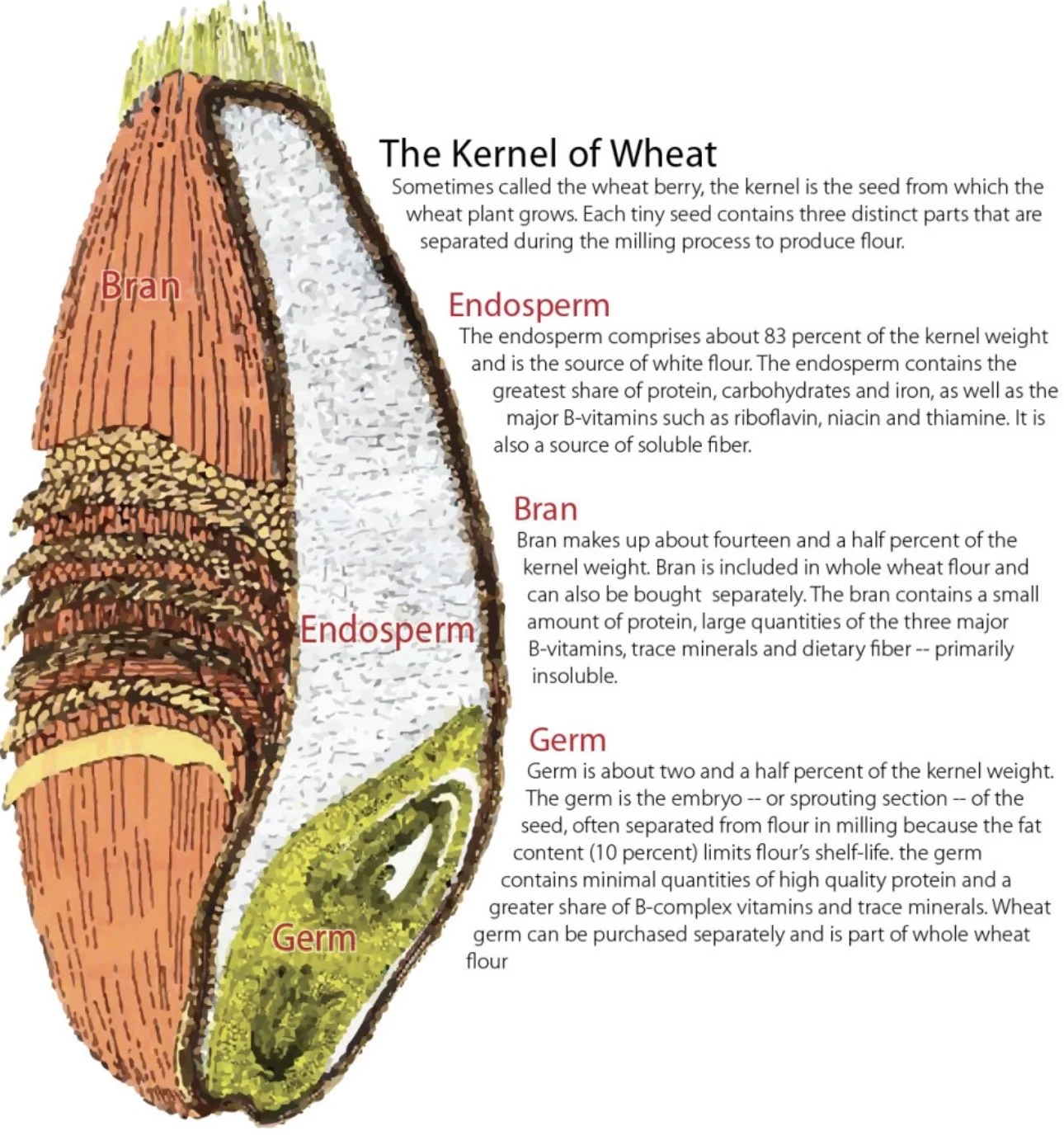
Sources: flour.com and Community Grains
A wheat kernel is comprised of a Bran (Protein, B-Complex vitamins, trace minerals, dietary fiber), Germ (fat, B-Complex vitamins, trace minerals) Aleurone Layer (proteins, fats, minerals, vitamins), and Endosperm (mostly carbohydrate, protein).
When flour is stone-milled, all the proteins, vitamins, lipids, minerals, and carbohydrates, are milled together and create a nutrient-dense flour. Fiber can be sifted out to desired degrees to obtain varying “fineness”, but a stone-milled flour will contain more nutrition than other milling that dismantles the wheat berry before milling it.
Roller Milling is the most common form of industrial milling. It relies on separating the grain’s anatomy before milling begins, with the goal of eliminating as much of the Bran, Germ, and Aleuron Layer as possible, in favor of milling as much of the Endosperm possible. The result is a shelf-stable flour (without the lipids that can go rancid) that is almost entirely just pure starch- a simple carbohydrate. Industrial Ag has bred wheat varieties and demands harvesting the wheat later than what is optimal for human digestion, specifically so that there is a harder Bran that can more easily separate from the Endosperm in the roller milling process.
Now we have wheat that’s bred with a higher Glutamin in order to perform in industrial mixers, resulting in flour that is denuded of nearly all nutritional value in order to be processed in a roller mill, resulting in a product with longer shelf-stability in the grocery stores.
Any “Whole Wheat” flour you buy at the grocery store, unless it is stone-milled, will have been milled with the Bran and Germ separated and then a portion of it added back into the flour.
I’m telling you right now, the difference between this Frankenstein Flour and one that is freshly stone-milled is like night and day! Fresh stone-milled flour is alive! It has moisture, aroma, texture, and FLAVOR. The first time I used a King Arthur Bread Flour after having used only stone-milled flours for nearly 6 months, I thought it was plaster or chalk. The texture was dry and dead- the color a blinding white, it produced a springy texture, but that was all. It was nothing special and I hated it.
The Farming
The most important question that is rarely asked, “How was my ingredient grown”?
I immediately flashback to the Portlandia episode when Peter and Nance grill the server about how the chicken was raised, visit the farm, end-up part of the commune, and the return to their dinner. A classic scene that captures the mania demanding transparency of our ingredients… except for flour! Why is that?!
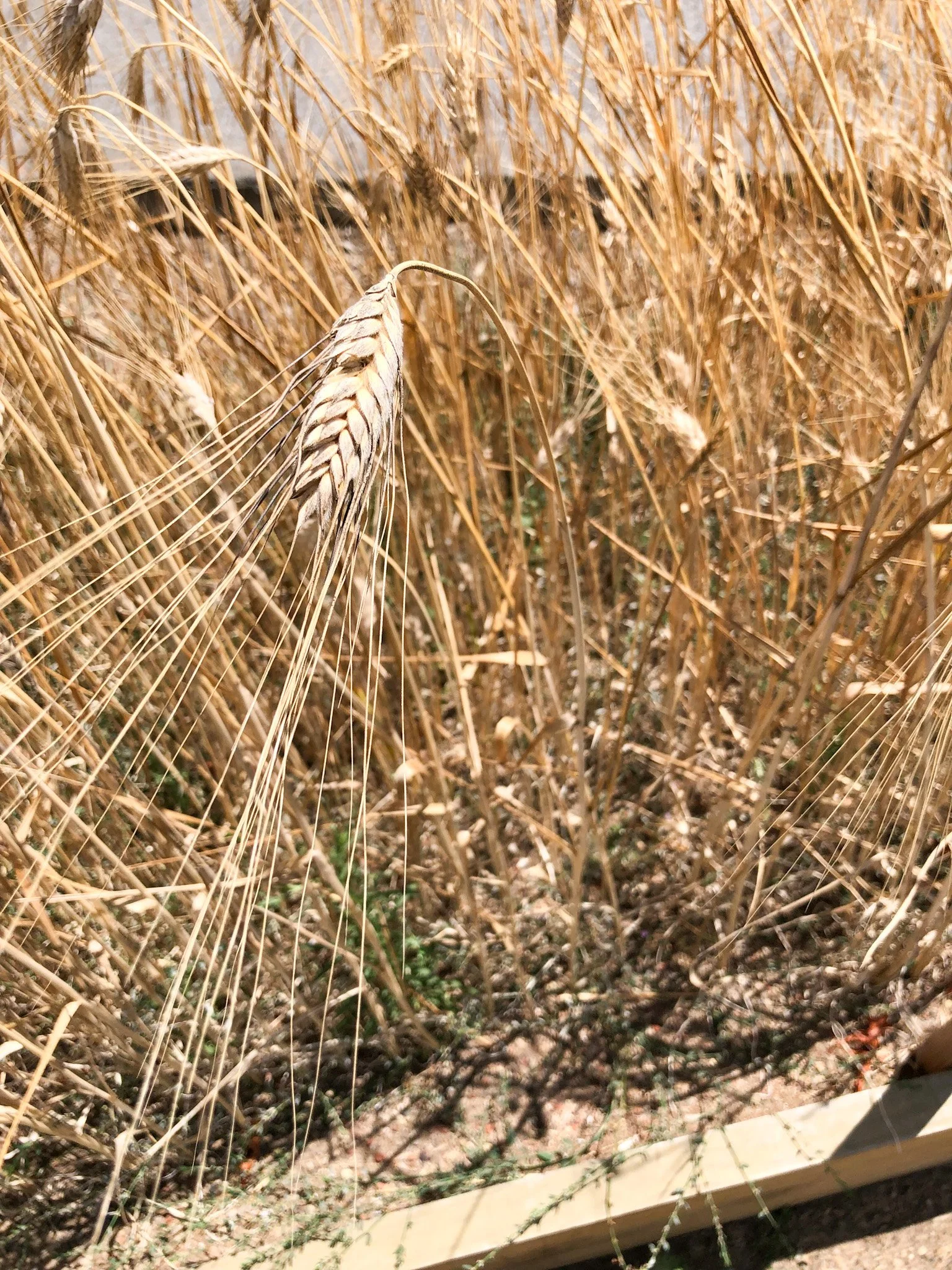
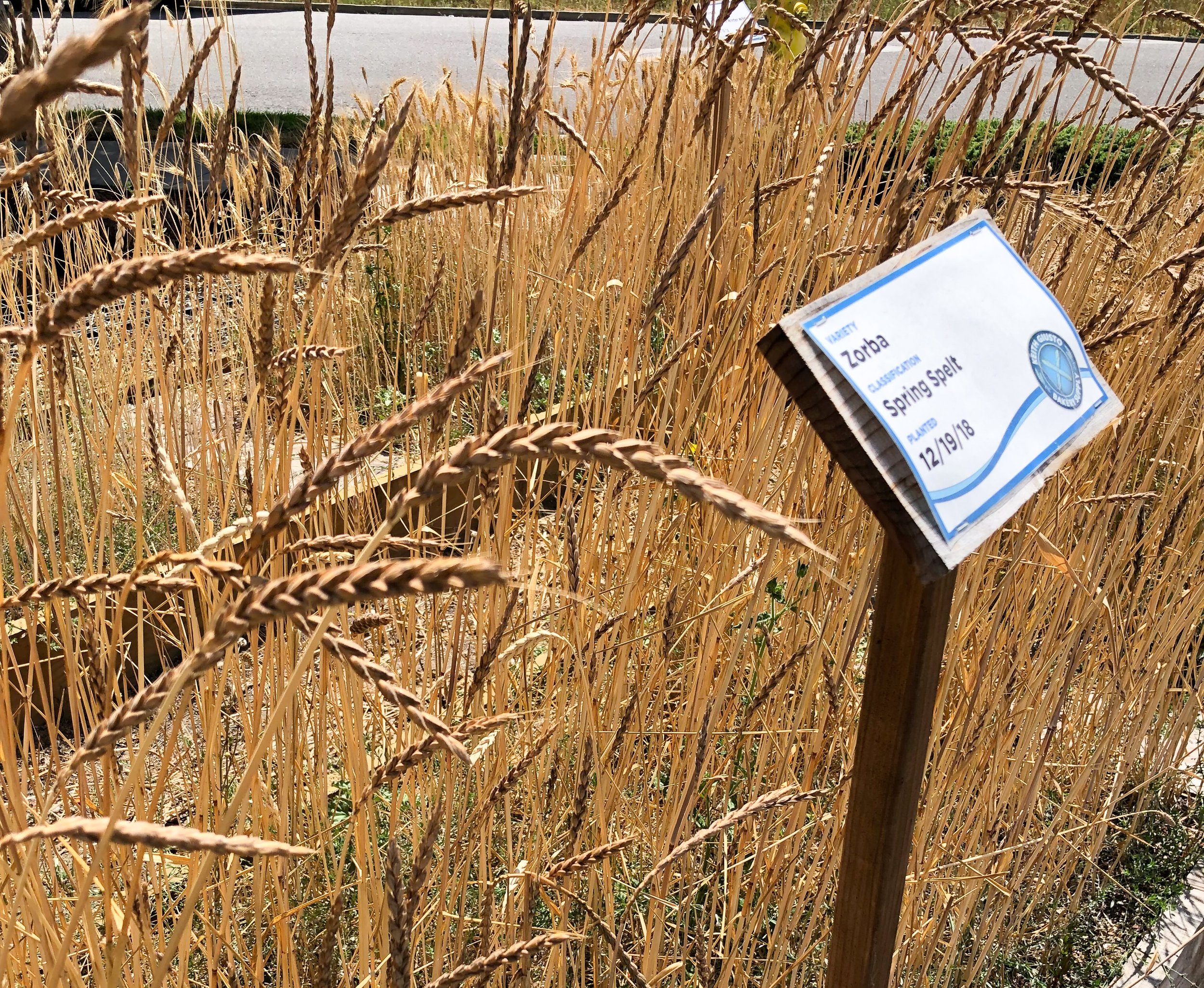
Khorasan and Spelt growing in the demo garden at Keith Giusto's in Petaluma, CA.
Wheat farming is something I’m still learning about. Farmers are faced with ceaseless pressures about what varieties or strains to grow, how to grow them, etc… And the industrial ag model, of a billion-acre monocrop is just plain stupid. It’s counter to nature- it’s a freak. And it ultimately does more harm than good to the food system, to the farmer, to the soil, to all of us. It makes us vulnerable. Throwing more money to research pest-resistant, disease-resistant strains of grain does not seem to have a good track record for long term sustainability- looking to the past may hold some of the answers we seek. It may not.
But I believe with everything I am, that nature holds all the answers- if we can only shut up, slow down, and observe. Which is why I am always looking to farmers who learn from nature; who work with nature; who include nature in their farming. It’s logical.
There are a lot of opinions about our current food system and farming, and I’ll save exploring them for another day, but for now, I’ll recall the memory of Sonora Wheat. A drought-tolerant wheat variety that is well-suited to the climate of the American Southwest. A variety that has grown alongside the civilizations of the western US since the Spanish invasion (before them the primary grain farmed and consumed was a cornucopia of beautiful native corn), taking whatever heat and lack of rain was thrown at it… and thriving. Without pesticides. Without herbicides. Without monocrops. Is it possible to regain that kind of resiliency again today, en masse?
The Sourcing Quest
Last Spring, I started a cottage licensed home bakery called Brot Blume here in South Lake Tahoe and was determined to use only stone-milled, heirloom varietal flours. Sourcing said flours proved somewhat of a quest- an ongoing one, I might add. What I discovered, was an incredible web of small farmers and millers who are dedicated to not only farming in a way that promotes soil health and biodiversity, but also who are dedicated to championing heirloom varieties and stone-milling. The problem I came across most frequently, was one of availability, accessibility, and information about the farming.
When approaching ingredient sourcing for my personal chef business, Mortar Pestle Cooking, I prefer to keep it as local as possible (which, for me, includes Tahoe to the Bay Area and parts of Northern Nevada) and I prefer to get to know the farmer if I can.
When searching for the wheat varieties that I wanted to work with, I quickly learned that I had to expand my geographic region to include the entire Western part of the country.
Comparative flour test bake test results.
Yes, California boasts some amazing grain growers and millers, but they do not necessarily sell the same wheat year-round, due to their relatively small size. Also, because I live in the mountains far from everything, it was going to be necessary to have the flour shipped- and Shipping Costs from 5 different millers just didn’t make financial sense. I almost went exclusively with Keith Giusto’s because they had been a favorite when I lived in Napa and they do offer quite the selection of varietal flours, BUT, their flours are not stone-milled and I couldn’t find any information about how they were farmed, aside from an “Organic” certification for their organic label. So, I kept on looking.
Through the process of searching for a Spelt grower and miller, I came across Barton Spring Mills located outside of Austin, TX and quickly found everything I was looking for. They work with farmers from Texas to Idaho and Washington. They’re big enough to carry a regular supply, but small enough to keep the flour fresh. I also found Chimacum Valley Grainery, outside Pt. Townsend, WA and really enjoy their Rye. More favorites are Hayden Flour Mills in Arizona and Capay Mills in Northern CA. I allow myself one modern wheat flour blend for my baguettes and sandwich loaf and that’s the Trailblazer Blend from Cairinspring Mills in the Skagit Valley, western WA. I love them, used to live in Whatcom County (one up from Skagit) and am happy to support a growing miller bringing stone-milled, responsibly farmed wheat, to a larger customer base.
The Baking
I spent a solid 6 months baking flops. Literal sourdough flop blobs. Some were so sour, I couldn’t even eat them (under-ripe sourdough starter and too long of a fermentation from cold temps). Did I mention it was over winter? In the mountains? At 6,500 ft?! Finally, as the starter got older and came into itself, and the temps started to increase, and I learned how to adjust freshly-milled flour to high altitude baking, the bread started to come out- like bread! Consistently! It was magic… magic fueled by a lot of hard work and study. And here’s what I learned:
Not all varietal flours are created equal. Some, like Einkorn, prefer lower hydration. Some, like Rye, ferment super fast and you can control that speed by how much water or flour you add and the temperature. High altitude means longer bake time, it also means higher hydration. This is very NON-Bakerly of me (but as mentioned earlier, I’m a chef not a baker, so oh well!) I threw out the percentages and started to go by feel. Anyone who tells you that you have to follow baking recipes and percentages to the T 100% of the time, is lying. It’s simply not true! Maybe it’s true when you always bake with the same exact dead flour in the same conditions every time, but not when you’re working with fresh flours.
There are so many factors that can influence the quantities of ingredients. When was your flour milled? Immediately before working with it requires lower hydration; older flour requires higher. What altitude are you at? Higher altitude requires more hydration, depending on the variety and when your flour was milled (Einkorn doesn’t need as much water to perform admirably- too much water makes it a slop). What’s the weather? Do you live somewhere super humid, or super dry? Hot, cold? All affect the rate of fermentation. And then there’s learning how each varietal flour performs- and that, my friends, only comes from time spent in their good company!
By mixing the doughs, folding them, shaping them, and baking them over and over again, you develop an intimacy, a relationship with each flour. You learn how it performs and what conditions it prefers to give you exactly what you want every time.
Sourdough Baking is not an end result, it is a seeking. One that will reward you at times and let you down at others, but it will always feed you. And what a journey!
To explore the world of wheat- its many flavors and textures, its connection to our ancestral past and to our communal present. Baking with these flours is an act of self-reliance. An act of revolt against the dead dusty flour the industrial world tries to heap upon our ailing guts. An embrace of flavor and nutrition. A way to take back one little piece of this illogical food system and claim it for ourselves- under our values.
The bread revolution continues with us!
Some Resources for You!
Millers I heart:
California
Farmer Mai’s Flour Share (and sign-up for her nesletter!)
Arizona
Idaho
Texas
Washington
Maine
Learn more, Read these books:
CA Wheat Commission (not a book, but a great resource with hands-on workshops)
The Third Plate, Dan Barber
The New Bread Basket, Amy Hollaran
Restoring Heritage Grains, Eli Rogosa
Flour is Flavor, Dawn Woodward
Grain by Grain: A Quest to Revive Ancient Wheat, Rural Jobs, and Healthy Food, Bob Quinn & Liz Carlile
Folks, This Ain’t Normal, Joel Salatin (less grain and more overall farming. A must read for anyone who cares about food!)
Holy Shit: Managing Manure to Save Mankind, Gene Lodgson (and anything he wrote- not directly grain related, but also a must read for insight into soil health)
Cookbooks
Sourdough, and everything written by Sarah Owens
The Miller’s Daughter, Emma Zimmerman
Heritage Baking, Ellen King, Amelia Levin, John Lee